An artist friend of mine kept a careful spreadsheet for five years. She applied to 47 residencies, paid $1,684 in application fees, and was accepted to 6. She estimates she spent roughly 480 hours on the applications themselves over those years — twelve full working weeks of studio time.
When she did the math, she realized something most working artists don't think about: at her hourly freelance rate, the time she'd spent on residency applications was worth more than the cost of attending three of the residencies she'd been accepted to. The applications weren't free, even when the residencies were.
This piece is about how to think about that math, and how to find the application volume that works for a working artist's actual life.
The acceptance rate honest accounting
Some real numbers, drawn from programs that publish their stats or where reasonable estimates exist:
- MacDowell: ~7% (300 fellowships across multiple sessions / ~4,000 applications)
- Yaddo: ~9% (230 of ~2,600 applications)
- Civitella Ranieri: ~1.5% (15 of ~1,000+)
- Skowhegan: ~4% (65 of ~1,500)
- Vermont Studio Center fellowships: ~10-15% with variation by cycle
- Hedgebrook: ~3%
- Hambidge: ~30-40% (much higher; reflective of the model)
- KHN Center for the Arts: ~25%
- Roswell Artist-in-Residence: ~3-5%
- Most fee-paid programs: 25-60% for spots, much lower for fellowships
The pattern: free + nationally-known programs are between 1% and 10%. Smaller programs and fee-paid programs run higher. There is no program with strong national reputation that accepts more than 10-15% of applicants.
What this means for a working artist:
- A serious applicant who applies to 10 top-tier programs in a year has a roughly 50-60% chance of at least one acceptance, assuming the work is competitive.
- An applicant who applies to only 3-4 has maybe a 25-35% chance.
- An applicant who applies to 15-20 (the carpet-bomb approach) has perhaps a 70% chance — but at a real cost in application quality.
The "what's an application actually worth" math
A serious residency application — one that actually has a chance — takes 6-12 hours. Updated artist statement (1-2 hours), project proposal (2-4 hours), portfolio curation and image preparation (1-2 hours), CV update (30 min), references and letters of recommendation coordination (1-2 hours), the form itself plus screening for fit (1 hour).
That's a working day per serious application. At 15 applications a year, that's 15 working days — three full weeks of studio time. For a working artist who's already balancing client work, teaching, and family obligations, three weeks of lost studio time is not negligible.
The math that matters: how much do you have to win for the time to be worth spending? Generally, one stipended residency or two unfunded ones, per year. If you're applying with that target and a realistic acceptance rate, the volume that works out is between 8 and 15 applications per year, depending on the quality of your application package.
The application strategy that actually works
What I've observed in working artists who consistently get into competitive programs:
They write applications in blocks. Three days in January, three days in September. They don't drip-apply throughout the year — they batch the writing work and reuse the materials across applications.
They have a baseline package they revise. A current artist statement, a current project proposal in two lengths (300 words / 1,000 words), a current CV, and a portfolio they refresh every six months. Each new application is a tailoring of the baseline, not a rewrite from scratch.
They apply to a calibrated mix. Two or three stretch goals (top-tier free programs), three to four targets (programs that fit their career stage), three to four reach-downs (programs they'd happily attend but expect a higher acceptance probability). Total: 8-11 applications per cycle, two cycles per year.
They skip programs they're not excited about. This is the underrated skill. An application written reluctantly reads as written reluctantly. Don't apply to a program you've talked yourself into.
They stop applying to programs they've been rejected from multiple times. A pattern of rejections from the same program after 3-4 attempts is the universe telling you something. Move the energy somewhere else.
The application fee accounting
At a $25-50 application fee per residency, 15 serious applications cost $375-750 per year. Over a five-year career, that's $1,800-3,750 in application fees alone. The artists who don't track this often don't realize how much they've actually spent on the application process.
A few practical points:
- Apply for fee waivers. Most programs have them; most artists don't ask. If your annual income is under $40k, you're often eligible.
- Distinguish between programs that justify their fee and programs that don't. A free program with a $50 application fee is using the fee as a soft gating mechanism — fine. A paid program with both a high application fee and a high program fee is double-charging — be skeptical.
- Track your fee spend per application. The Pro application tracker sums this for you across the year. The pattern usually surprises artists who haven't kept score.
The annual rhythm that works
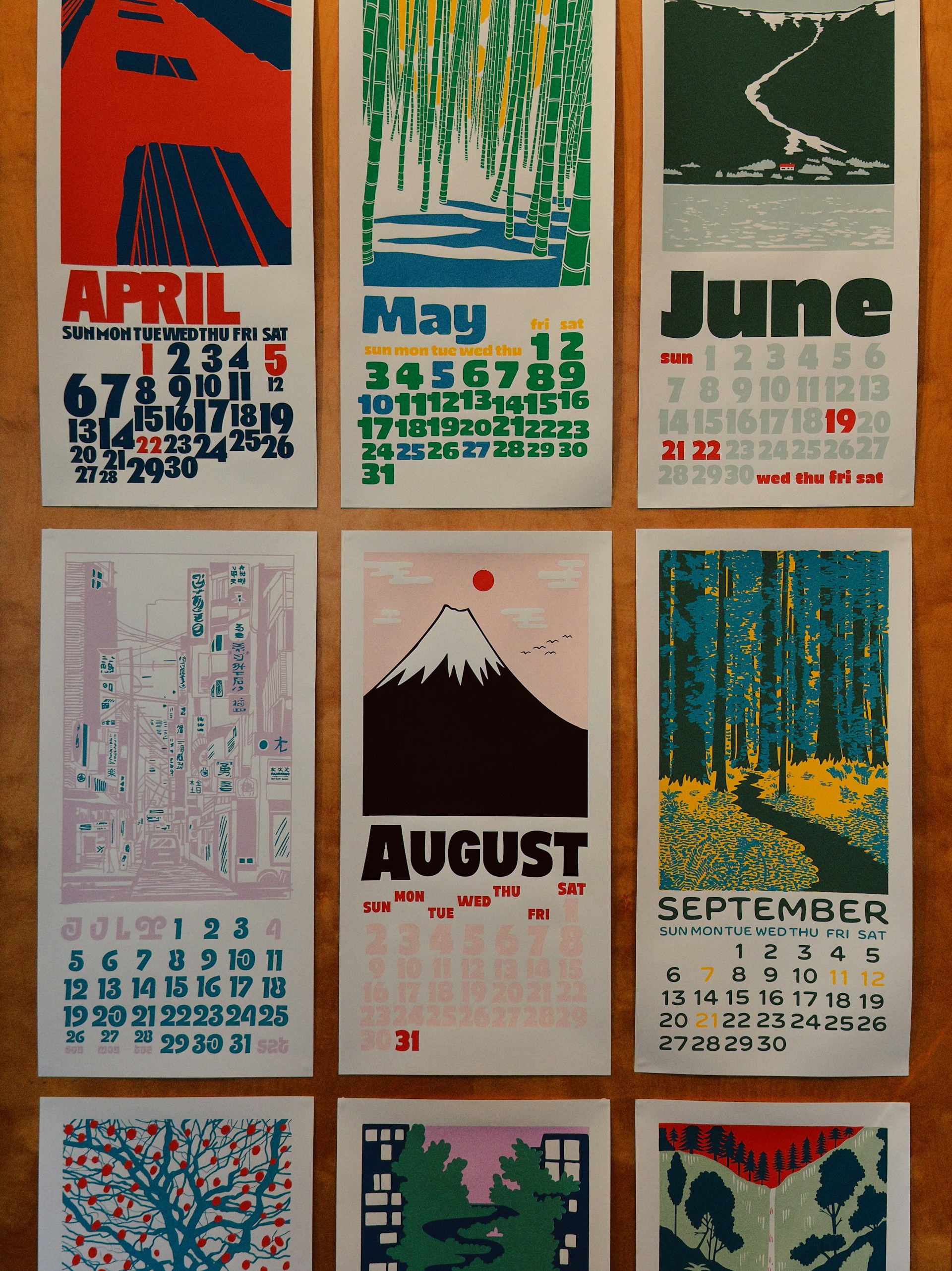
Based on the residency application calendar I wrote earlier:
- January cluster (most density): Write 6-8 strong applications in a focused work week. This is your primary application month of the year.
- September cluster (second density): Write 4-6 applications in a focused work week. These are the fall-deadline programs.
- March-April pickup: Maybe 2-3 stretch goals to programs with off-cycle deadlines.
- July (skip): Quiet month. Don't apply. Use the time to update your CV, refresh portfolio images, or rest.
That's 12-17 applications a year, concentrated in two work-weeks of application time, with the rest of the year for studio work.
The biggest leverage move
If you do nothing else, set up free deadline reminders on every residency you'd seriously consider applying to. That way you stop missing deadlines you would have applied to if you'd remembered, and you stop scrambling to write applications in the last 48 hours.
I've seen working artists more than double their acceptance rate just by switching from "apply when I remember" to "apply on a calendar." Most of the gain was in application quality — the writing improves dramatically when you're not panicking.
The residency game is real. The math is real. The artists who play it best treat it like a project, not like a series of lottery tickets — and they spend more of the year in their studios because they've concentrated the application work into a few focused weeks.
The free deadline reminder flow is the lowest-effort way to start. Drop your email on any open call; we'll email you 5 days before it closes. Pro gives you alerts on every residency you save, the application tracker, and the True Cost Calculator.