On my desk this morning is a copy of the Alliance of Artist Communities directory from 2005 — a thick paperback with a soft pastel cover, profiles of 94 residencies, and a regional map of the United States. Back then it was the canonical reference: if your program made it into the AAC's "Extended Profiles" section, you were one of the legitimate residencies in this country. Programs not in the book mostly didn't exist yet, or weren't yet considered serious.
I went through it page by page this week and cross-referenced every single program against the RMAR directory of 2026. The exercise was meant to be a quick audit — what's still around, what isn't. It turned into something else: a partial map of two decades of cultural infrastructure quietly changing shape under our feet.
Of the 94 programs in the 2005 AAC directory:
- 43 are still operating and listed in RMAR today
- At least 12 closed entirely between 2005 and now
- The rest are a mix of: renamed/absorbed (a handful), shifted out of residencies into other programming (museums whose AIR programs ended), and a stubborn 9 international programs whose current status I couldn't verify without going country by country
The headline number is sobering on its own: roughly one in eight serious US residencies from twenty years ago no longer exists. Some of the closures were sudden, some slow, all of them representative of larger pressures the field doesn't talk about often enough.
The closures
Oregon College of Art and Craft shut down in 2019 after 113 years. Founded as the Arts and Crafts Society in 1907, it had survived two World Wars and the Great Depression. It did not survive the 2010s squeeze on small private art colleges. A residency, a BFA program, an MFA program, a campus in southwest Portland — all gone. The land was sold. Some of the faculty moved to PNCA. The story isn't about a failed residency; it's about the institution that hosted the residency running out of money.
Louisiana ArtWorks in New Orleans closed in the years after Hurricane Katrina, in the financial wreckage that the city's cultural sector spent a decade processing. Northwood University Alden B. Dow Creativity Center in Midland, Michigan — a fellowship for boundary-pushing creative projects — ended when Northwood's resources shifted away from the program. Willard R. Espy Literary Foundation in Oysterville, Washington, a writers' residency in the late, beloved essayist's home, closed when the family could no longer sustain it. ArtCenter/South Florida in Miami Beach reorganized into Oolite Arts and moved away from the residency model that defined it for decades.
Smaller programs in the 2005 directory — Aurora Project, HOME, Inc., The Mesa, Red Cinder Creativity Center, Rockmirth, Robert M. MacNamara Foundation, Hall Farm Center — vanished more quietly, often without public announcement. There is no obituary for most of these. They simply stopped having a website at some point, then stopped being mentioned.
What killed them, broadly: the 2008 recession crushed donor-dependent programs that hadn't yet endowed themselves. COVID closed others that were marginal beforehand. Some lost a single founder or director and never recovered. A few got out-competed by larger, better-funded peers that absorbed their applicant pool.
The survivors
The 43 programs from the 2005 AAC list that are still operating in 2026 are, almost without exception, the institutions you'd predict: MacDowell, Yaddo, Civitella Ranieri, Penland, Hambidge, Headlands, Hedgebrook, Djerassi, Atlantic Center for the Arts, Banff, Vermont Studio Center, Anderson Ranch, Ucross, Roswell, Women's Studio Workshop, Santa Fe Art Institute, VCCA, Bemis, Pilchuck, Sculpture Space, Kala, Sacatar, Montalvo — these are the legacy programs that defined the model.
What did they do that the closed programs didn't? A few patterns are visible, even at this rough level:
- Endowment, not just operating revenue. The survivors mostly built endowments large enough to weather recessions. MacDowell, Yaddo, and Civitella all hold endowments in the eight or nine figures. The closed programs ran on annual fundraising, single major donors, or government grants that proved fragile.
- A clear, defensible identity. Programs with a specific discipline focus (Penland for craft, Pilchuck for glass, Sculpture Space for sculpture, Hedgebrook for women writers, Pottery Workshop for ceramics) tended to survive better than generalist programs at the same scale. Niche became defensive.
- Real estate they owned outright. The programs that owned their land — usually as a 501(c)(3) holding the deed — survived in ways that programs renting space (or hosted as a wing of a larger institution) did not. When the host institution's priorities shifted, the residency went with them.
- A residency-specific staff, not just program directors borrowed from a museum. The programs run as part of a museum's broader operations were the first to be cut when museums tightened up.
What came after 2005
The 2005 AAC directory was a snapshot. The 21 years since have brought a new generation of programs the book couldn't have included:
- Galveston Artist Residency (2010) — a year-long, $20K-stipend program on a Texas barrier island, founded by Eric Schnell. Acceptance rate around 3%; one of the best-funded US programs for emerging artists.
- The Studios at MASS MoCA and other museum-hosted programs that emerged in the 2010s as institutions added artist-in-residence layers to their public-facing programming.
- The international wave: programs like Heima (Iceland, 2013), Centre Pompadour (France, 2015), GlogauAIR (Berlin, 2006), and dozens of others outside the US that didn't appear in the AAC's domestically-focused 2005 directory but now form a substantial share of where serious artists go.
- Just-announced: The Residency at Casa Gràcia, Hauser & Wirth's new program in Menorca founded by Rashid Johnson and Sheree Hovsepian, with applications open through July 2026 for the 2027 cycle. New programs founded by working artists with serious institutional backing — that pattern is something the 2005 directory almost didn't contain.
What's changed structurally between 2005 and 2026 isn't just the names. The model has broadened. There are more international programs. More programs explicitly designed for caregivers (Women's Studio Workshop's $350/week childcare stipend was unusual then; now it's a benchmark others reference). More transparency about acceptance rates, hidden costs, and the actual experience of being in residence. More artist-founded, artist-run alternatives to the institutional model. And — for better and worse — more residencies overall, which means more decisions for artists to make about where their limited application time goes.
What this means if you're applying
The closed programs are part of the data, not just nostalgia. Three practical implications for artists planning a residency cycle:
Sturdiness matters. If you're choosing between a venerable program with a real endowment and a five-year-old program with a charismatic founder and no balance sheet, the venerable program is the safer bet. Not always the better experience — sometimes the new program is electric — but a more reliable one. Check whether the residency owns its real estate. Check the staff page for depth, not just a founder.
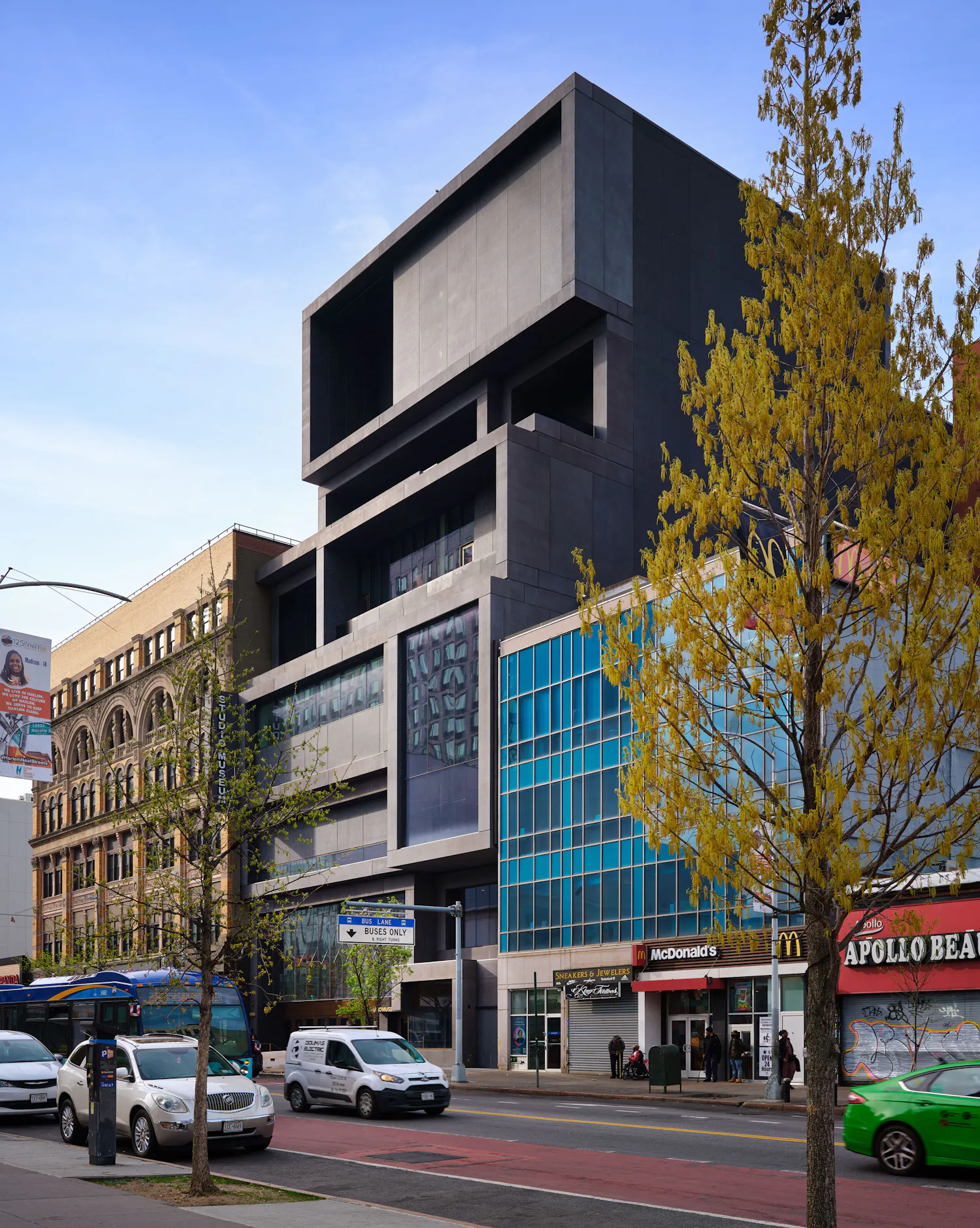
Look at the museum-adjacent residencies with extra care. These rise and fall with their host institution. The Studio Museum in Harlem and Wave Hill have run their residencies for decades because the parent institutions are stable and committed. Other museum residencies have been quietly defunded. Ask alumni from the last two years what the current state is.
Niche programs deserve attention. The survivors disproportionately had a specific focus. If you work in a niche that has a niche residency (ceramics, glass, sculpture, fiber, women writers, sound), the niche programs often have better infrastructure for your medium than generalist programs do — and they're more likely to still be around in ten years.
What this means for RMAR
The reason I went through the AAC directory is that we're trying to make sure RMAR captures both the living and the recently-lost parts of this field. The closed programs from 2005 will be added to the directory archive as their histories are confirmed — reviews from the early 2010s of programs that no longer exist still tell a story. The active programs we didn't yet have are being added one by one.
If you ran a program that's in the 2005 AAC directory and isn't in RMAR yet, submit it — it's free for programs to list, and the historical context matters. If you attended one of the closed programs and still have memory of it, write a review. The archived listing will still take it. This is how a directory becomes a record.
The residency field is changing faster than it talks about. The least we can do is keep an honest count.